
Trim, Fascia, and Siding Repaired Before Exterior Painting should be reviewed for soft spots, failed edges, visible wear, and unstable sections so repainting starts on surfaces that are more ready to hold the finish. Trim, fascia, and siding should be reviewed before exterior painting begins because damaged boards, open seams, worn edges, and unstable surfaces can affect how well the new finish holds.
Exterior Painting Usually Starts With Repair Review
Many homeowners think exterior painting begins with washing and scraping alone. In reality, a better project often starts by understanding what parts of the exterior need repair before paint can hold properly.
That review usually focuses on:
- trim wear
- fascia stress
- siding condition
- weak transitions
- soft or damaged areas
- sections where earlier failure has already started
If those surfaces are not reviewed first, repainting may only cover over problems that are still active underneath.
Trim Often Shows Failure Before Larger Surfaces
Trim details are often some of the first areas to show wear.
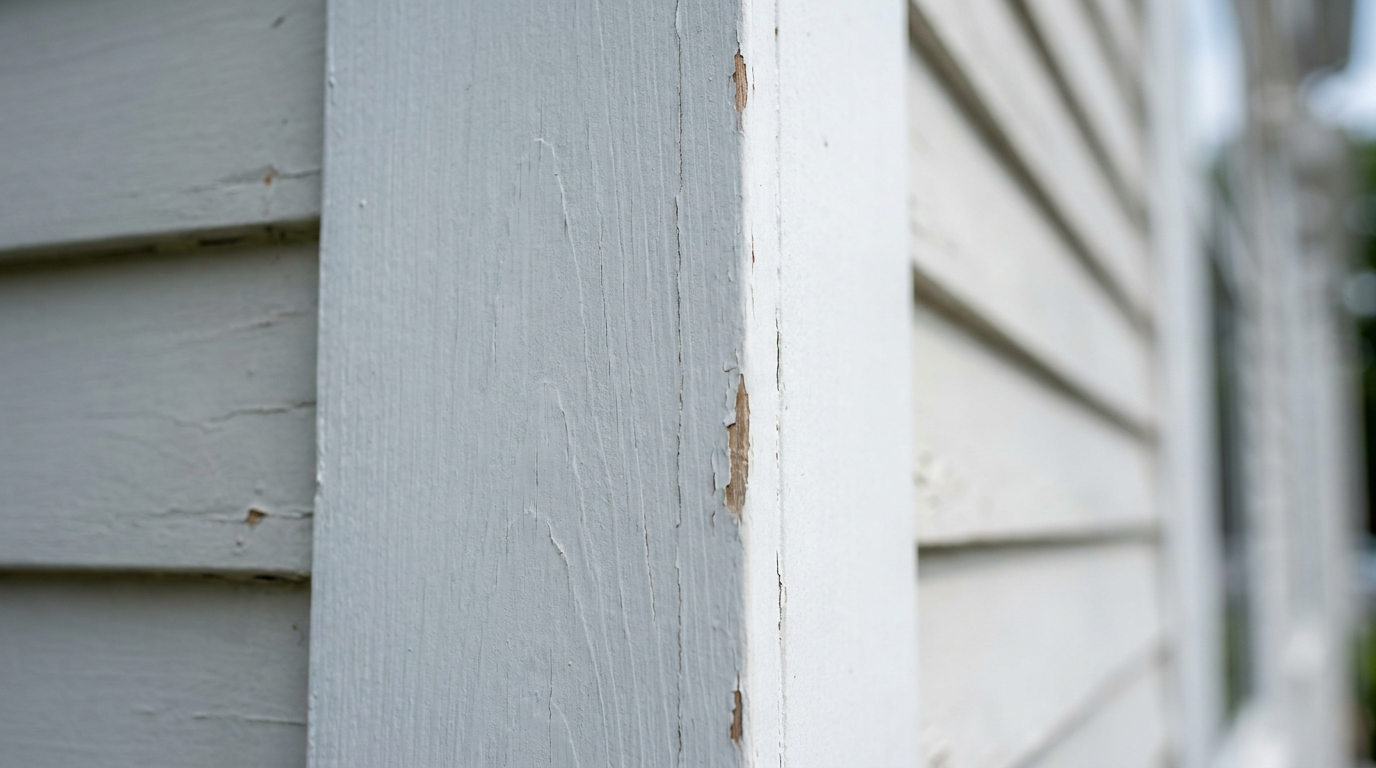
That may include:
- peeling edges
- cracking around profiles
- soft sections from repeated exposure
- failed caulk transitions
- joints that no longer look stable
- earlier repairs that are breaking down again
This is one reason trim repair is often part of the prep conversation before exterior painting begins.
Open seams and failing joints often show up around trim, fascia, siding edges, and transitions before the paint itself looks fully failed. That is why exterior caulk failure should be reviewed before repainting, not hidden under a new coat.
Comparison Table — What Repair Review Often Reveals First
| Exterior Area | Why It Matters | What to Review |
| Trim | Often shows early wear before main surfaces | Whether edges, joints, caulk lines, or earlier repairs are failing |
| Fascia | Takes heavy exposure near the roofline | Whether moisture stress, soft spots, or visible weakness are present |
| Siding | Can change the scope when damage is broader | Whether cracks, splits, loose areas, or unstable sections need correction |
| Transitions | Expose weak areas between surfaces | Whether joints and profile changes are still stable enough to hold paint |
| Damaged Sections | Affect durability and long-term hold | Whether the surface is still sound enough to prep and paint |
Fascia Can Carry More Weather Stress Than Homeowners Expect
Fascia often takes more weather stress than broader field surfaces because of its position and exposure.
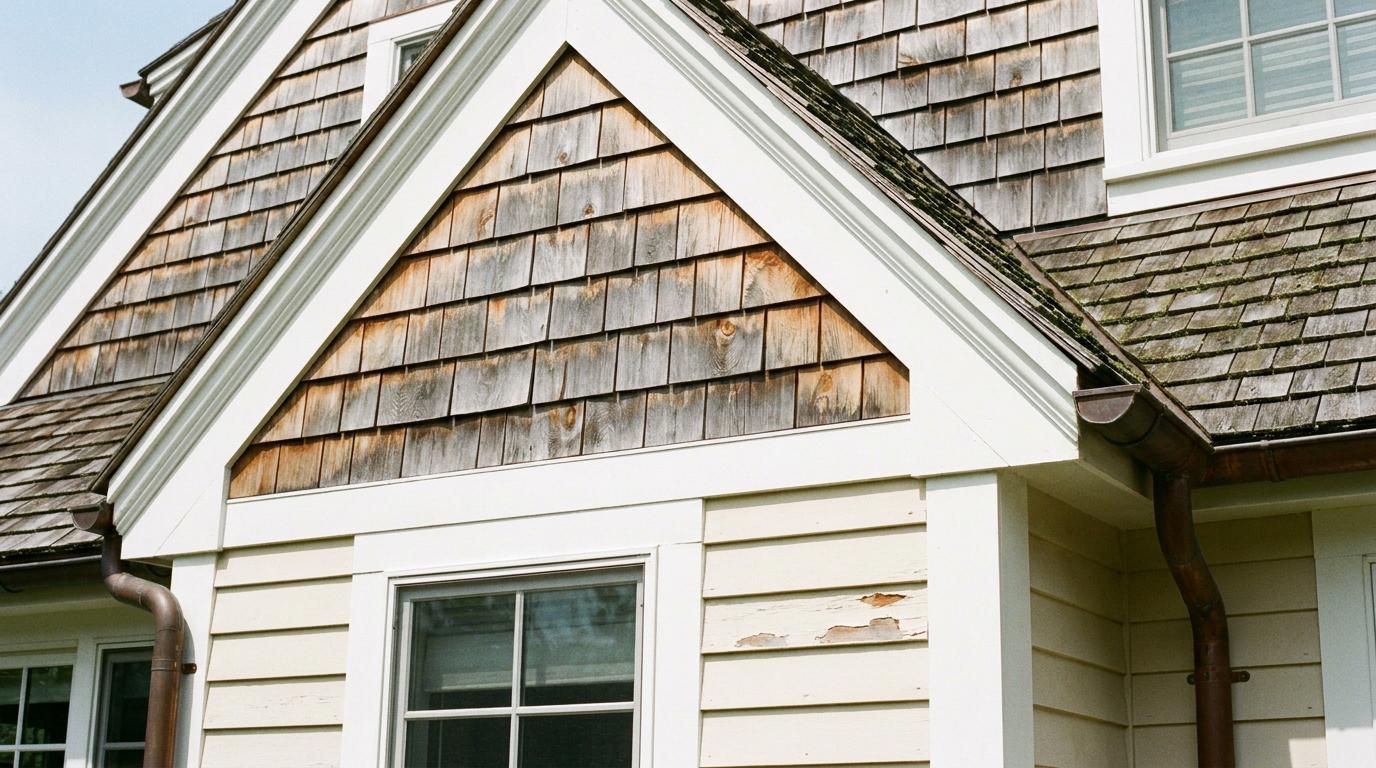
That can lead to:
- repeated moisture stress
- edge wear
- softening in vulnerable sections
- paint breakdown that returns quickly
- visible weakness near roofline transitions
When fascia is already showing signs of instability, the repaint path may need more correction before finish coats begin.
Soft wood, staining, swelling, and repeated paint failure can point to moisture moving through the exterior system. In those cases, homeowners should understand the moisture problems that ruin exterior paint before treating the project as a simple repaint.
Siding Repair Needs Can Change the Scope of the Project
Siding does not always need the same type of correction as trim or fascia, but damaged sections can still change the project significantly.
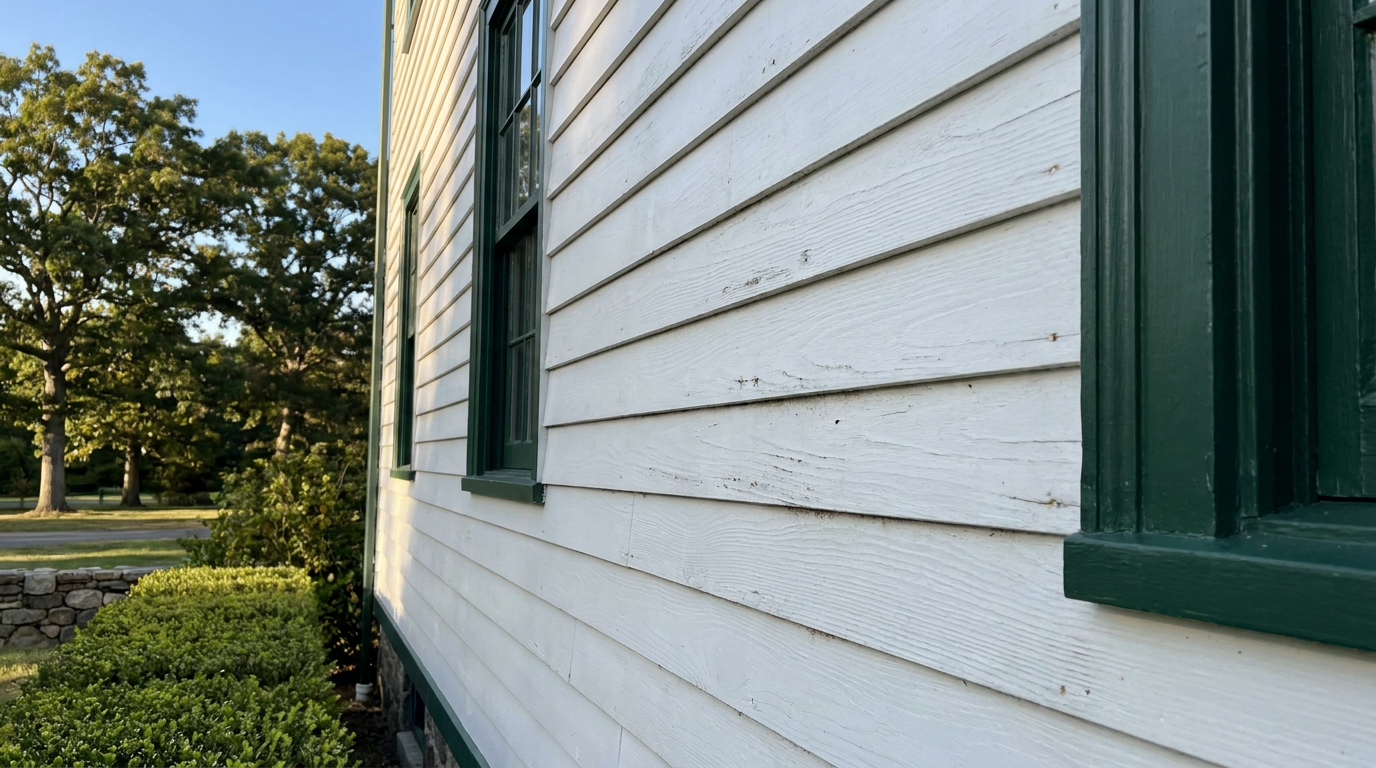
That may involve:
- loose or failing areas
- visible cracks or splits
- weathered sections that are no longer holding evenly
- boards or sections that need more than surface prep
- earlier patching that is not blending into the broader surface well
When siding repair is needed, the job may shift from a straightforward repaint to a more corrective scope.
Different exterior materials respond differently to wear, repair, moisture, and coating history. Before deciding what should be repaired or repainted, it helps to understand how surface type affects painting on wood, vinyl, stucco, clapboard, cedar, trim, and siding.
Repairs Should Be Based on Condition, Not Assumption
Not every home needs broad exterior repairs before painting. The real issue is what condition the surfaces are in when the project is reviewed.
That is why a better repair decision looks at:
- how deep the wear goes
- whether the area is soft or only weathered on the surface
- whether the section is still stable enough to prep and paint
- whether moisture has already affected the substrate
- whether repair is needed for durability, appearance, or both
This keeps the repair conversation tied to actual need instead of guesswork.
For homes in New Haven County, trim, fascia, and siding condition can vary by age, shade, moisture exposure, previous repaint cycles, and the way repairs were handled before past coatings.
Repairs Before Painting Help the Finish Hold Better
The purpose of repair is not only to make the surface look better before painting. It is to improve what the next coating system is being applied onto.
A better repair path can help by:
- removing weak sections from the scope of repainting
- reducing early failure in damaged areas
- improving the stability of trim and fascia
- giving siding repairs a cleaner transition into the painted finish
- helping the finished project age more evenly over time
That is why repair and prep are closely connected on older or more weathered homes.
Repair decisions should be part of the prep conversation, especially on older or more detailed homes. Before repainting, homeowners may benefit from understanding exterior painting prep standards for older Connecticut homes, including how surface condition, repairs, primer, and finish timing affect the final result.
How Homeowners Should Think About Exterior Repairs More Clearly
A better question is not only “what gets painted?” It is:
- what is still sound enough to prep and paint
- what needs repair first
- where trim and fascia are failing sooner than siding
- whether moisture is affecting the repair decision
- how much correction is needed before repainting is worth doing
That gives homeowners a clearer understanding of how repair review affects scope, durability, and the final result.
A cleaner repair path starts with a surface review, not a rushed repaint. A stronger process helps identify damaged trim, loose paint, failed caulk, soft areas, primer needs, and the right sequence before finish coats are applied.
Trim, Fascia, and Siding Repaired Before Exterior Painting FAQ
Do trim, fascia, and siding always need repair before painting?
Not always. The need for repair depends on whether the surfaces are still sound enough to prep and paint or already too weakened for a straightforward repaint.
Why does trim often need more attention first?
Trim usually shows edge failure, moisture stress, and wear sooner than broader siding surfaces.
Can fascia problems affect the painting scope?
Yes. If fascia is soft, unstable, or visibly failing, it can change the prep and repair path before painting begins.
Does siding damage always mean full replacement?
Not always. Some siding issues can be corrected more locally, while others may change the project more broadly depending on condition.
Why should repair review happen before repainting?
Because paint holds better when the underlying surfaces are more stable and damaged sections are addressed first.
Start With a Clearer Repair Review Before Painting
If you are planning exterior painting, the most useful next step is to review trim, fascia, and siding condition before deciding the home is ready for a straightforward repaint.
A better repair review helps homeowners understand what is still sound, what needs correction first, and how those repairs affect the prep path, the estimate, and the long-term hold of the finish.
Alves Pro House Painters helps Connecticut homeowners with clearer exterior evaluations, organized prep expectations, and repair-aware painting plans built around real surface condition instead of surface-level assumptions.
If you are seeing worn trim, failing fascia, damaged siding, soft wood, open seams, or early paint failure, the next step is to review the exterior condition before repainting. You can request an exterior painting estimate based on the actual repair, prep, and surface conditions.
What Happens Next
- We confirm your location and project type
- We review trim, fascia, and siding condition
- We identify likely repair and prep factors
- We prepare a written estimate based on real conditions
Repairs affect scope • Weak sections need review • Better prep starts with sound surfaces