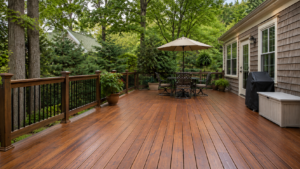

A weathered deck in Connecticut can often be restored with the right process: cleaning, brightening, sanding, and re-staining. On most decks, a penetrating stain performs better than film-forming paint because it wears more gradually and is less likely to trap moisture or peel into slick sheets.
The key in CT is prep and timing. The wood needs to be cleaned properly, allowed to dry, and stained during the right weather window before freeze-thaw winters start working against the finish.
Staining a weathered deck in CT starts with a choice many homeowners get backwards: stain or paint. On a horizontal, high-traffic surface that sees wet springs, humid summers, leaves, shade, and freeze-thaw winters, that choice can decide how the deck looks in two years.
Homeowners planning deck work locally can also review Alves Pro’s deck staining and restoration service to understand how deck prep, product choice, and written scope should be planned before work begins.
Here is how to bring a gray deck back, when staining makes more sense than painting, and what kind of prep helps the finish last through Connecticut weather.
Stain vs. Paint on a Deck
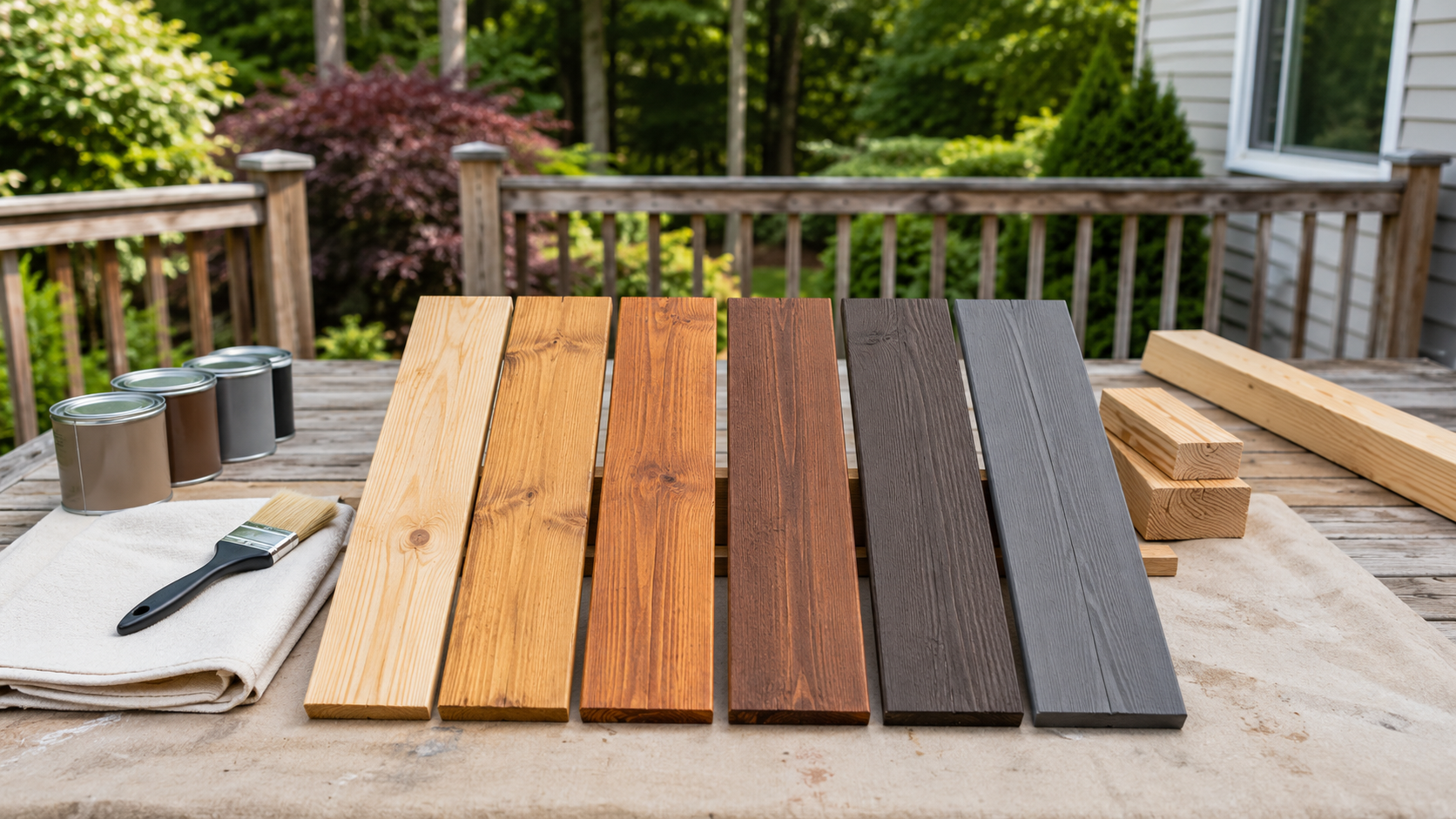
Stain vs. paint on a deck is not a close call for most Connecticut homeowners.
Stain penetrates the wood instead of forming a film on top. Paint sits on the surface, and on a damp horizontal board with foot traffic, it can trap moisture and peel into slick sheets.
A penetrating stain wears down more gradually and is usually easier to maintain. That matters on decks that deal with rain, sun, shade, leaves, foot traffic, and winter movement.
Deck Stain Opacity Options
| Opacity | Look | On a CT Deck |
| Transparent or clear | Shows the full wood grain | Least protection and usually needs more frequent recoating |
| Semi-transparent | Shows grain while adding tone | Often a good balance of protection and natural wood appearance |
| Solid stain | Hides more grain and adds the most color | More coverage, but can wear more visibly on high-traffic boards |
Why Decks in Connecticut Gray and Grow Mildew
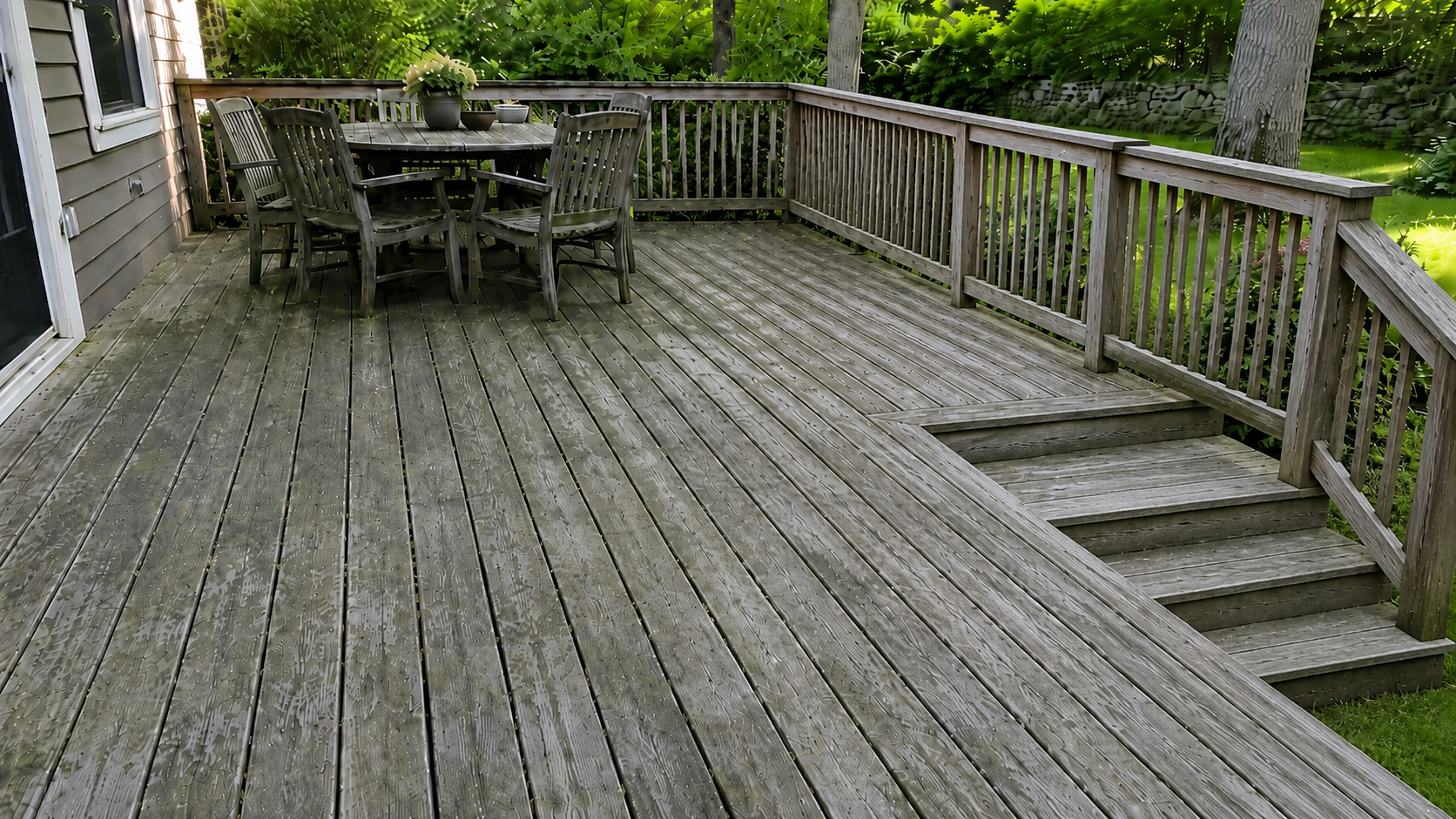
Decks in Connecticut gray and grow mildew because they take direct weather on a flat surface that holds water.
Unlike siding or trim, deck boards collect moisture, pollen, leaves, shade, and organic debris on the surface. Shaded or tree-covered yards stay damp longer after rain, which gives mildew more time to grow.
Gray wood is usually surface wear from UV exposure and moisture. Mildew grows when the surface does not dry quickly enough. Both are common deck problems in Connecticut, and both are treatable when the boards and framing are still structurally sound.
This is also why deck staining should be planned around moisture, not just color. Homeowners can also review how moisture ruins exterior finishes to understand why damp surfaces create coating problems.
Can This Deck Be Restored, or Does It Need Replacing?
Most weathered decks can be restored rather than replaced if the framing and boards are structurally sound.
Gray, mildewed, dull, or faded boards are usually surface problems, not structural problems. Cleaning, brightening, sanding, and re-staining can bring many weathered decks back to a usable, attractive finish.
Replacement is usually for decks with rot, failing framing, unsafe boards, loose structure, or major damage. That is a safety question, not a finish question.
A deck may be a restoration candidate when:
- The boards are weathered but still solid
- The surface is gray, dull, or mildewed
- The framing feels stable
- There are no major soft or rotten areas
- The main issue is appearance and surface protection
- The deck still feels safe under normal use
If the issue is structure, movement, rot, or safety, repair or replacement should be reviewed before any staining plan.
The Restoration Steps: Clean, Brighten, Sand, Seal
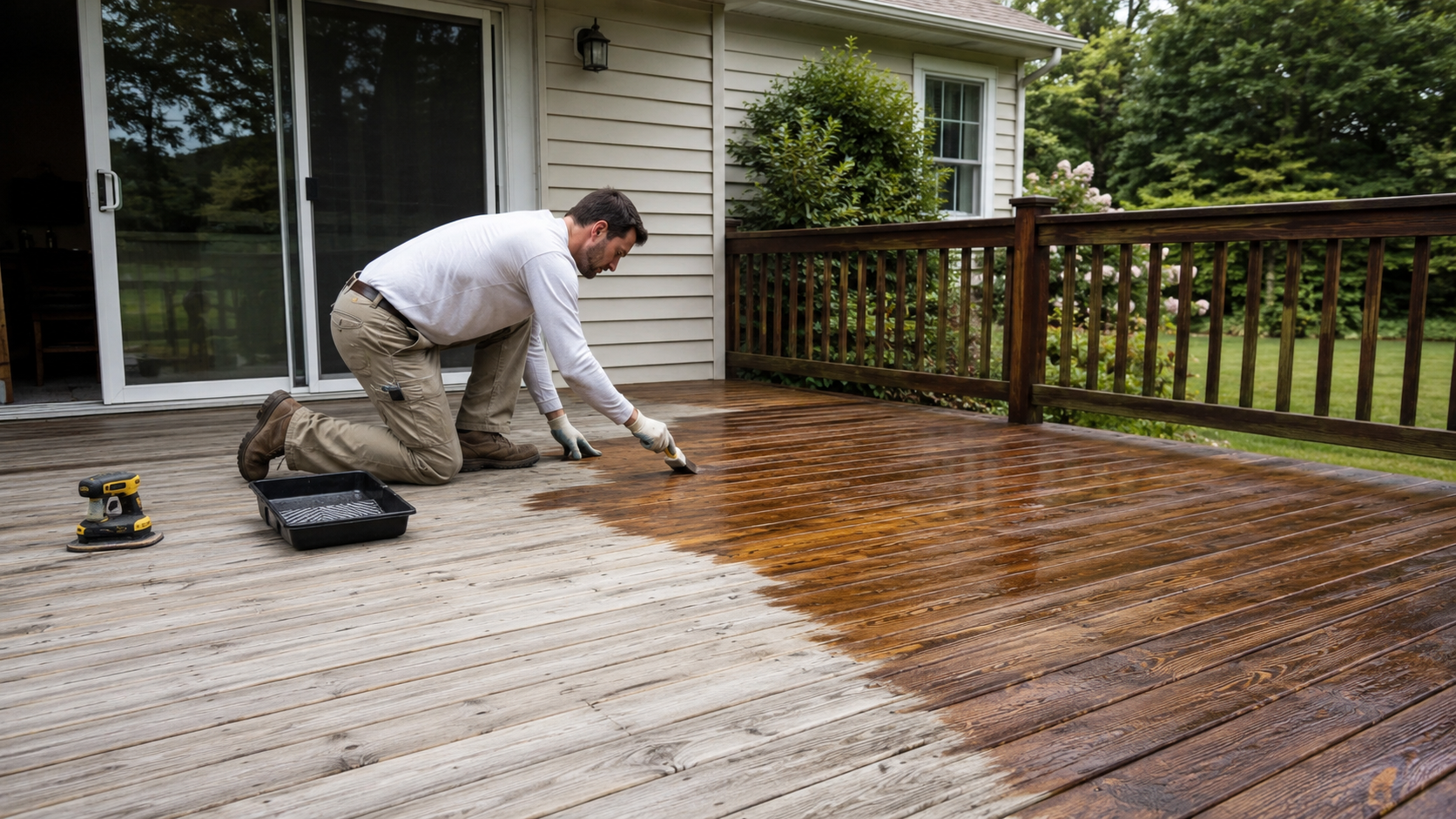
The restoration steps — clean, brighten, sand, and seal — are what turn gray wood back into a deck you want to use.
Cleaning removes mildew, grime, pollen, leaf tannins, and organic buildup. Brightening helps restore the wood’s tone and prepares weathered fibers for stain. Sanding smooths rough grain and improves the finished feel underfoot.
A quality penetrating stain then helps seal and protect the surface. Skip the cleaning and brightening, and the stain may only lock in the gray. Skip the dry time, and the finish may fail early.
Deck Restoration Prep Matrix
| Prep Step | Why It Matters | What It Helps Prevent |
| Clean the boards | Removes mildew, dirt, pollen, and organic buildup before staining | Staining over contaminated wood |
| Brighten the wood | Helps restore tone and prepares weathered fibers for stain | A dull, gray, uneven finish |
| Sand rough areas | Smooths raised grain and improves the finished surface | Rough boards and uneven absorption |
| Allow full dry time | Prevents trapping moisture under the new finish | Early failure and poor adhesion |
| Apply the right stain | Matches the product to exposure, traffic, wood condition, and desired look | Wrong opacity or poor maintenance cycle |
Freeze-Thaw and the Best Time to Stain a Deck in CT
Freeze-thaw is one reason timing matters so much in Connecticut.
Moisture left in the wood can expand as it freezes and contract as it thaws. Over time, that movement can work against the finish, especially if the deck was stained before the wood had enough time to dry.
The best time to stain a deck in Connecticut is dry, mild weather, usually late spring through early fall. The wood needs to dry fully before staining, and the stain needs a proper cure window before damp or cold weather returns.
For more on how local weather wears coatings, homeowners can review what affects finish durability in CT.
Choosing Opacity: Transparent, Semi-Transparent, or Solid
Choosing opacity is a trade-off between showing the grain and hiding wear.
Transparent and clear products show the most natural wood grain, but they usually provide less pigment protection and may need more frequent maintenance.
Semi-transparent stain often gives homeowners a practical balance: enough tone to improve protection and appearance, while still allowing the wood grain to show.
Solid stain provides more color and coverage, but on high-traffic horizontal boards it may show wear more clearly over time. The best choice depends on the wood condition, shade level, exposure, desired look, and maintenance expectations.
Keeping a Deck Protected Year to Year
Keeping a deck protected means cleaning and recoating on a sensible cycle instead of waiting until it turns gray again.
Connecticut decks take hard weather. Rain, sun, shade, leaves, pollen, and winter movement all affect the maintenance cycle. Staying ahead of the surface is usually less expensive than waiting for a full restoration later.
A simple maintenance plan may include:
- Keeping leaves and debris off the boards
- Cleaning mildew before it spreads
- Watching high-traffic boards for early wear
- Refreshing stain before the deck fully grays out
- Checking railings, steps, and shaded corners regularly
The same logic applies to other exterior wood surfaces. If the fence is weathered too, the same applies to a weathered fence.
What a Written Deck Staining Scope Should Include
A written deck staining scope should explain the condition of the deck, what prep is included, what product will be used, and how dry time or weather may affect scheduling.
Before approving a deck restoration estimate, homeowners should understand:
- Whether the deck can be restored or needs repair
- What cleaning and mildew treatment are included
- Whether brightening is part of the process
- What sanding is included
- What stain opacity and product will be used
- How long the deck needs to dry before staining
- When the deck can be used again
Alves Pro works from our deck staining and restoration process so homeowners understand whether the project is a maintenance coat, a restoration, or a more involved deck repair conversation.
Staining a Weathered Deck in CT FAQ
Should you stain or paint a deck?
On a deck, stain is usually the better choice. It penetrates instead of forming a film, so it is less likely to trap moisture or peel into slick sheets the way paint can on a high-traffic horizontal surface.
Can an old, gray deck be restored instead of replaced?
Usually yes, if the framing and boards are structurally sound. Graying and mildew are surface problems that cleaning, brightening, sanding, and re-staining can often fix. Replacement is for rot or unsafe structure.
How often should you re-stain a deck in Connecticut?
It varies with exposure, shade, foot traffic, product, and wood condition. Connecticut decks generally need a regular maintenance cycle, and staying ahead of wear is usually cheaper than waiting for a full restoration.
What is the best time of year to stain a deck in CT?
Dry, mild weather is best, usually late spring through early fall. The wood needs to dry fully before staining, and the finish needs time to cure before cold or damp weather returns.
Why does my deck get slippery and gray?
Both are usually related to moisture and exposure. Gray wood is surface wear from sun and water, while slipperiness often comes from mildew or organic buildup growing on damp boards.
Request a Deck Staining Estimate in Connecticut
A weathered deck should be evaluated around wood condition, moisture, mildew, gray boards, sanding needs, dry time, product choice, and maintenance expectations.
Alves Pro House Painters helps Connecticut homeowners plan deck restoration and staining with written scopes, careful prep, and a process built around real deck conditions.
You can review deck projects in our portfolio, then request a deck staining estimate based on the condition, scope, and finish goals of your deck.
What Happens Next
- We review deck condition, shade, mildew, gray wood, and traffic areas
- We identify cleaning, brightening, sanding, dry time, and stain needs
- We explain the written deck restoration scope before work begins
- You get an estimate that helps you decide whether to restore, stain, or repair
Stain wears better than paint • Dry wood matters • Prep protects the finish