
Repaint cycle by surface for Connecticut homes changes based on wood trim, clapboard, cedar, moisture exposure, sun, shade, and prep quality. Because each material handles moisture, weather, movement, and prep differently before repainting becomes the better next step. That is why exterior painting should be planned around the actual surface, not one fixed timeline for every home.
Different Exterior Surfaces Do Not Follow the Same Repaint Cycle
Many homeowners ask how often a house should be repainted as if every surface on the exterior follows the same timeline. In reality, repaint cycles change depending on the material and how that material responds to weather, moisture, and movement.
That often affects:
- how quickly the surface shows wear
- where failure appears first
- how well the earlier coating system is holding
- how much prep is needed before repainting
- whether one part of the home is aging faster than another
This is why trim, clapboard, cedar, and other exterior materials should not be judged by one broad repaint rule.
Different materials do not age the same way. Wood, vinyl, stucco, clapboard, cedar, and trim can each change the prep path, product choice, and repaint timing. Homeowners comparing exterior materials should understand how surface type affects painting before assuming every exterior follows the same repaint cycle.
Wood Trim Often Needs Attention Earlier Than Broader Surfaces
Wood trim usually carries more edge exposure, more detail stress, and more visible weathering than larger field surfaces.
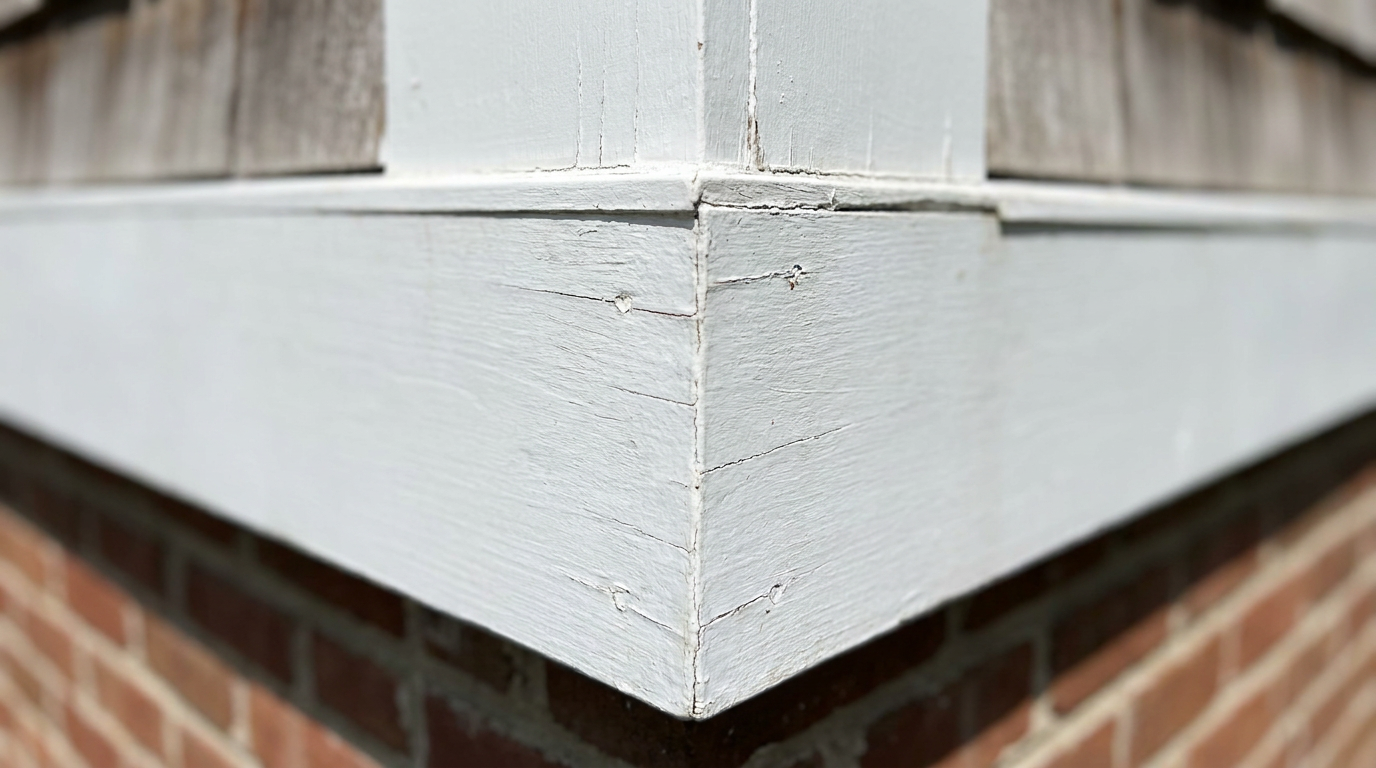
That may lead to:
- earlier peeling at edges and profiles
- more moisture stress around joints
- visible failure in narrower detail areas
- faster wear where sun, shade, and water all affect the same sections
- repaint needs that show up before the siding looks fully ready
This is one reason wood trim often enters the repaint conversation sooner than the broader exterior.
Comparison Table — How Surface Type Changes Repaint Timing
| Surface Type | Why It Matters | What to Review |
| Wood Trim | Often shows stress sooner than broader surfaces | Whether edges, joints, and detail areas are weakening first |
| Clapboard | May age unevenly by exposure | Whether sun-heavy or shaded elevations are wearing at different speeds |
| Cedar | Often needs a more surface-aware repaint decision | Whether moisture, weathering, and prep history are affecting stability |
| Shaded Areas | Can shorten the repaint cycle | Whether slower drying and dampness are stressing the coating earlier |
| Prep Quality | Shapes how evenly the next cycle holds | Whether weak areas were corrected before the last repaint |
Clapboard May Age More Evenly but Still Changes by Exposure
Clapboard can sometimes hold more evenly than smaller trim details, but repaint timing still depends heavily on how the house is exposed.
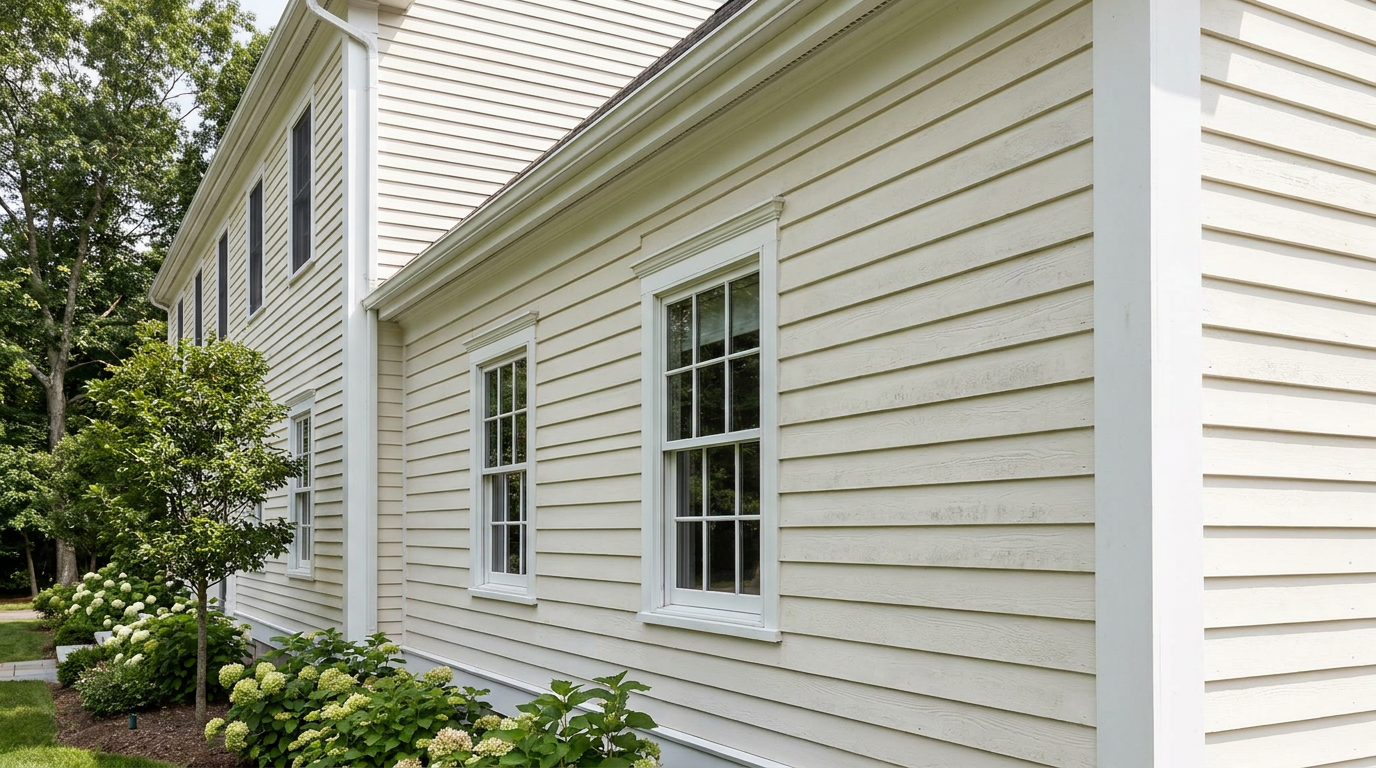
That may change based on:
- sun-heavy elevations
- shaded sides that dry more slowly
- lower sections with more moisture stress
- older paint buildup that is starting to weaken
- areas where the surface is still mostly sound but clearly aging
This means clapboard may not fail all at once. Some elevations may begin showing wear earlier while others continue holding reasonably well.
Cedar Often Needs a More Surface-Aware Repaint Decision
Cedar can behave differently than other exterior materials because it often responds more visibly to moisture, weathering, and maintenance history.
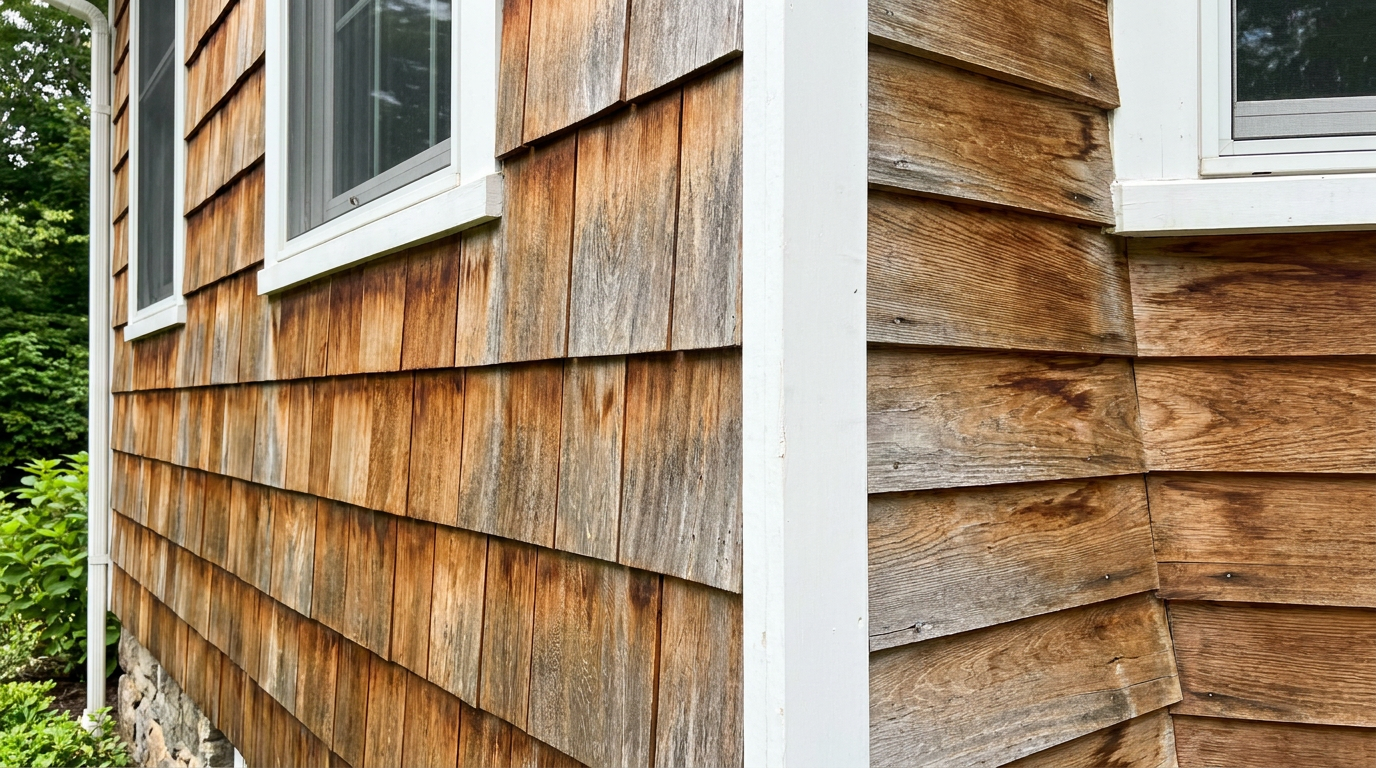
That may affect:
- how evenly the surface ages
- how much weather stress shows through over time
- whether the material still looks stable enough for a cleaner repaint path
- how much prep is needed before new coatings can hold well
- whether the repaint decision is being driven by appearance, protection, or both
This is one reason cedar should be reviewed on its own condition, not treated like a standard broad-surface repaint.
Repaint Cycles Change When Moisture and Shade Are Involved
Surface type is only part of the repaint cycle. Exposure conditions can change timing too.
That often includes:
- shaded areas staying damp longer
- moisture weakening some sections earlier
- trim and cedar reacting faster in vulnerable zones
- clapboard aging unevenly by elevation
- repeated stress around edges, joints, and detail transitions
This is why two homes with similar materials can still need repainting on very different timelines.
Even when two homes have similar surfaces, exposure can change the repaint cycle. Sun, shade, moisture, wind, and previous prep all influence what affects exterior paint durability in Connecticut homes.
Prep Quality Can Extend or Shorten the Next Repaint Cycle
Repaint timing is not only about the material itself. It is also shaped by how well the earlier project was prepared before painting began.
That may involve:
- how thoroughly weak areas were corrected
- whether peeling or unstable paint was removed properly
- how well joints and transitions were addressed
- whether moisture-prone areas were reviewed carefully
- how stable the surface really was before finish coats went on
A stronger prep path can help the next coating system age more evenly and reduce early failure in the most vulnerable areas.
Older homes often have previous coating layers, worn trim, surface movement, and repair history that change the repaint cycle. Before repainting, it helps to understand exterior painting prep standards for older Connecticut homes so the new finish is applied over a more stable surface.
How Homeowners Should Think About Repaint Cycles More Clearly
A better question is not only “how often should this house be painted?” It is:
- which surface is aging faster
- where trim is weakening before clapboard
- whether cedar is still holding evenly
- how moisture and shade are changing repaint timing
- whether the earlier prep path supported a stable paint cycle
That gives homeowners a much clearer way to understand whether repainting is becoming necessary because of age alone or because certain surfaces are already moving into earlier failure.
Surface type is one part of the repaint cycle, but exposure, prep quality, moisture, sun, and maintenance also matter. Homeowners planning exterior work may also want to review how long exterior paint lasts in New Haven County before deciding whether the home is ready for repainting.
For homes in New Haven County, repaint timing can vary by surface type, exposure, shade, moisture, older coating layers, and how the previous exterior project was prepared.
Repaint Cycle by Surface: Wood Trim, Clapboard, Cedar FAQ
Do wood trim, clapboard, and cedar need repainting on the same cycle?
No. Each surface responds differently to weather, moisture, movement, and prep quality, so repaint timing usually varies.
Why does wood trim often need repainting sooner?
Trim usually carries more edge exposure, more joints, and more visible stress than broader siding surfaces.
Can clapboard still age unevenly?
Yes. Different elevations may get different levels of sun, shade, moisture, and weather pressure, so clapboard does not always wear evenly.
Why should cedar be reviewed separately?
Cedar often responds differently to moisture, weathering, and coating history, so repaint decisions should be based on its actual condition.
Does prep quality affect the repaint cycle too?
Yes. A stronger prep path can improve how evenly the coating holds and help reduce earlier failure in weaker areas.
Start With a Clearer Surface-by-Surface Repaint Review
If you are trying to understand when your home should be repainted, the most useful next step is to review how trim, clapboard, cedar, and other exterior surfaces are actually aging instead of relying on one broad repaint timeline.
A better repaint review helps homeowners understand which materials are still holding well, which ones are weakening first, and what that means for prep, scope, and timing before the next exterior project begins.
Alves Pro House Painters helps Connecticut homeowners with clearer exterior evaluations, organized prep expectations, and repaint planning built around real surface behavior instead of one-size-fits-all assumptions.
If your home has wood trim, clapboard, cedar, uneven paint wear, or surfaces aging at different speeds, the next step is to review the exterior conditions before repainting. You can request an exterior painting estimate based on the actual surface, exposure, and prep needs.
What Happens Next
- We confirm your location and project type
- We review the exterior surfaces and current wear
- We identify likely repaint timing by material and exposure
- We prepare a written estimate based on real conditions
Surfaces age differently • Exposure changes timing • Repaint cycles are not equal