
Exterior Painting Prep Standards for Older Connecticut Homes should start with surface condition, adhesion stability, repair needs, and moisture exposure so repainting begins with a cleaner, more durable foundation before exterior painting begins.
Older Homes Usually Need More Prep Before Exterior Painting
Many homeowners think repainting starts with color and finish coats. On older Connecticut homes, the real starting point is usually prep.
That is because older exteriors often carry:
- layered paint history
- weathered trim and siding
- weak edges and transitions
- surface movement over time
- moisture-prone sections
- earlier repairs that may not be holding evenly
That means prep standards usually need to be higher before repainting can hold the way homeowners expect.
Older homes often need a more careful prep path because previous paint layers, surface movement, worn trim, and repair history can change the real scope. A stronger process helps identify what should be washed, scraped, sanded, repaired, primed, caulked, and protected before finish coats are applied.
Prep Standards Should Start With Surface Stability
Before exterior painting begins, the first question should be whether the existing surface is stable enough to receive a new coating system.
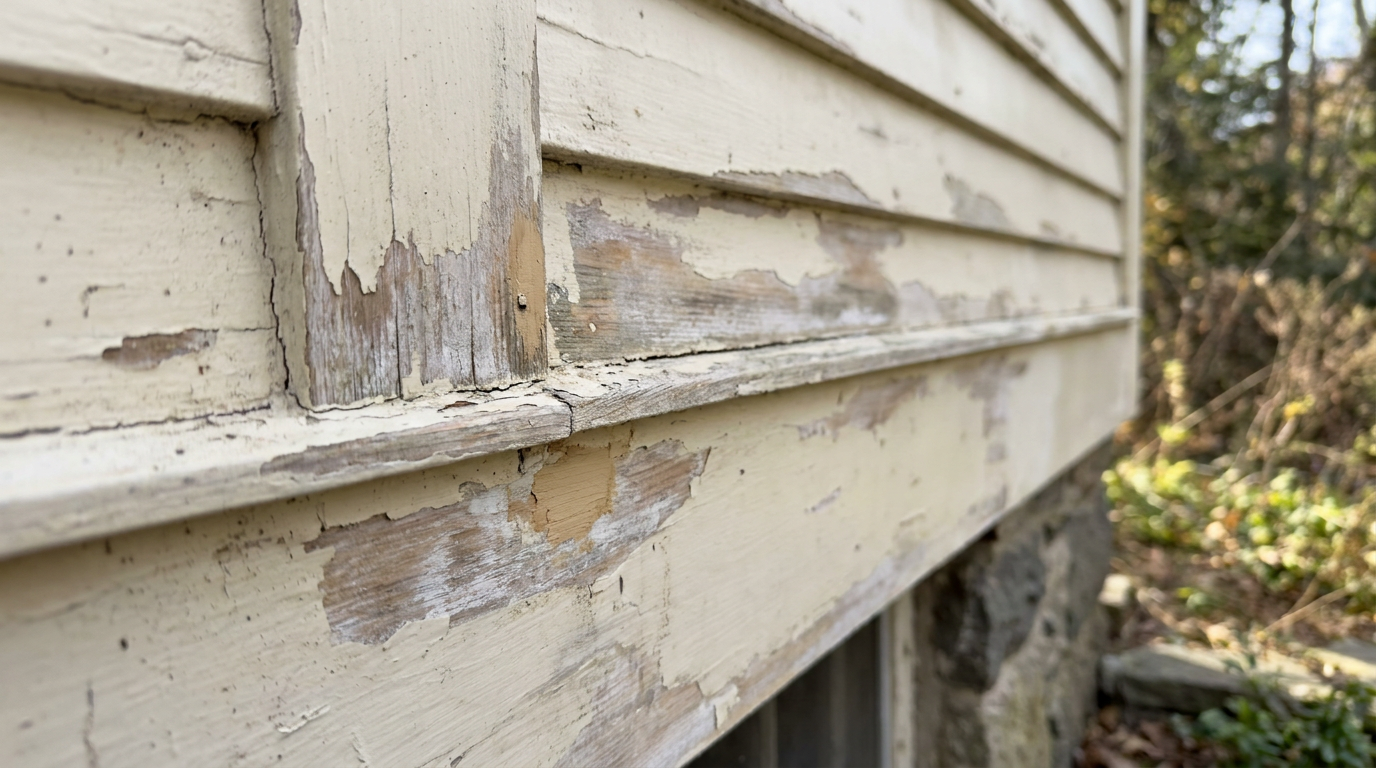
That often means reviewing:
- peeling or lifting paint
- weak adhesion in older layers
- soft or stressed trim areas
- chalking, cracking, or edge failure
- previously patched sections
- surfaces that may look paintable but are no longer holding evenly
A better prep path starts with understanding whether the home needs a straightforward repaint or a broader stabilization phase first.
Prep should also include a realistic look at repair needs. If boards are soft, seams are open, or exterior details are no longer stable, homeowners may need to understand whether trim, fascia, and siding should be repaired before exterior painting instead of simply covering the issue with a new coat.
Comparison Table — What Raises Prep Standards on Older Homes
| Prep Factor | Why It Matters | What to Review |
| Surface Stability | Determines whether repainting can hold properly | Whether existing layers are still adhering evenly |
| Paint History | Older buildup can affect prep depth and bonding | Whether layered coatings are creating weak edges or stressed areas |
| Moisture Exposure | Can increase failure risk in aging surfaces | Whether trim, joints, or shaded sections are holding dampness |
| Repair Depth | Changes the scope beyond basic repainting | Whether patching, correction, or stabilization is needed first |
| Detail Level | Older trim and transitions often fail sooner | Whether edges, fascia, cedar, or decorative sections need more corrective prep |
Older Connecticut Homes Often Need More Corrective Prep
On newer or cleaner surfaces, prep may be more limited. On older homes, preparation often becomes a larger part of the project.
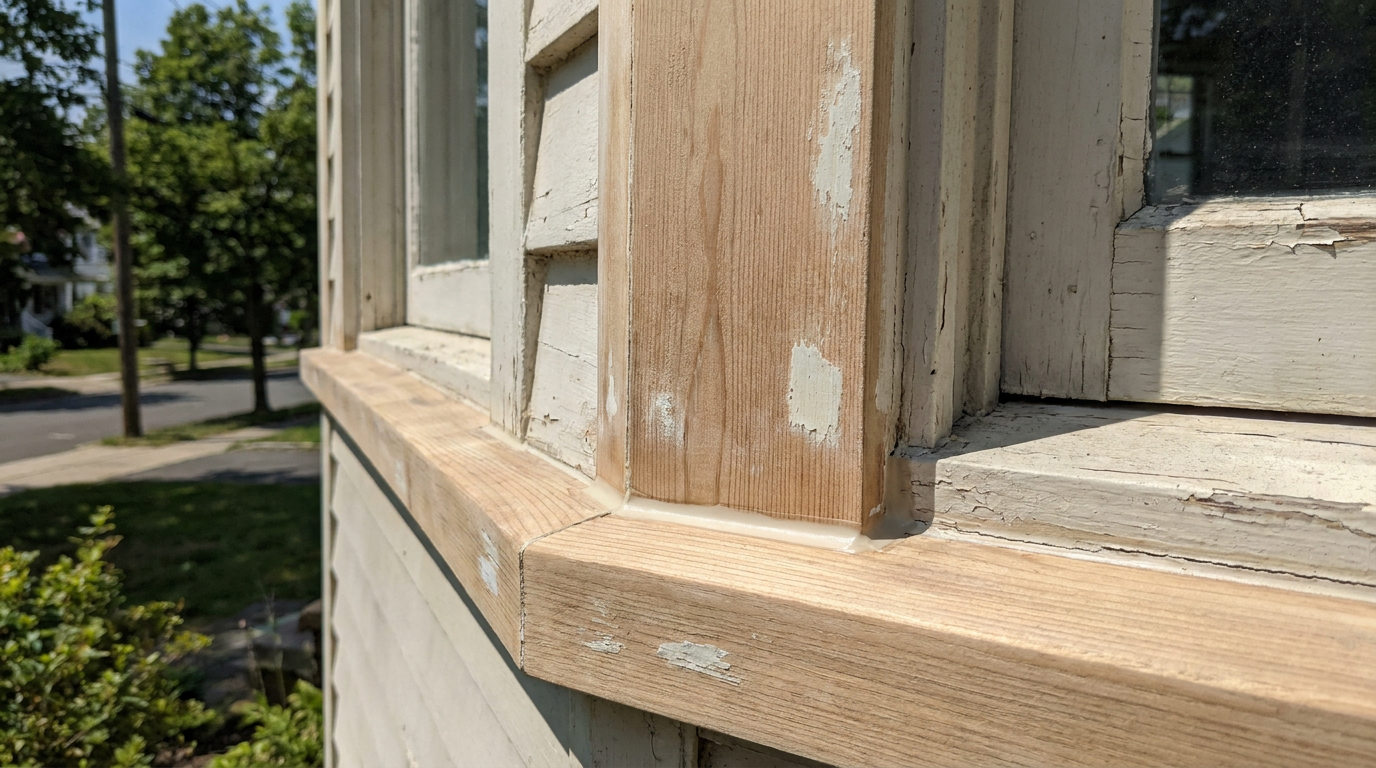
That may include:
- washing and surface cleaning
- scraping failing paint
- sanding unstable edges
- caulk correction
- patching weak or damaged areas
- protecting and sequencing around more delicate surfaces
This is one reason older homes often price and schedule differently than newer repaint projects, even when the visible square footage looks similar.
Caulking is not just a cosmetic detail on older homes. Open seams, failed joints, and gaps around trim or siding can allow moisture movement before paint failure becomes obvious, which is why exterior caulk failure should be reviewed before repainting.
Moisture and Age Usually Raise the Prep Standard
Older Connecticut homes are often more sensitive to moisture-related wear, especially where trim details, joints, and weather-facing sections have been stressed over time.
That may show up through:
- softer trim sections
- recurring failure near joints
- bubbling or peeling around stressed areas
- slower drying on shaded elevations
- old paint layers that are no longer sealing the surface well
- repeated repaint cycles over already weak areas
When moisture and age overlap, prep needs usually go beyond light cleanup.
Prep Standards Change by Surface Type and Detail Level
Older homes rarely fail evenly across every surface.
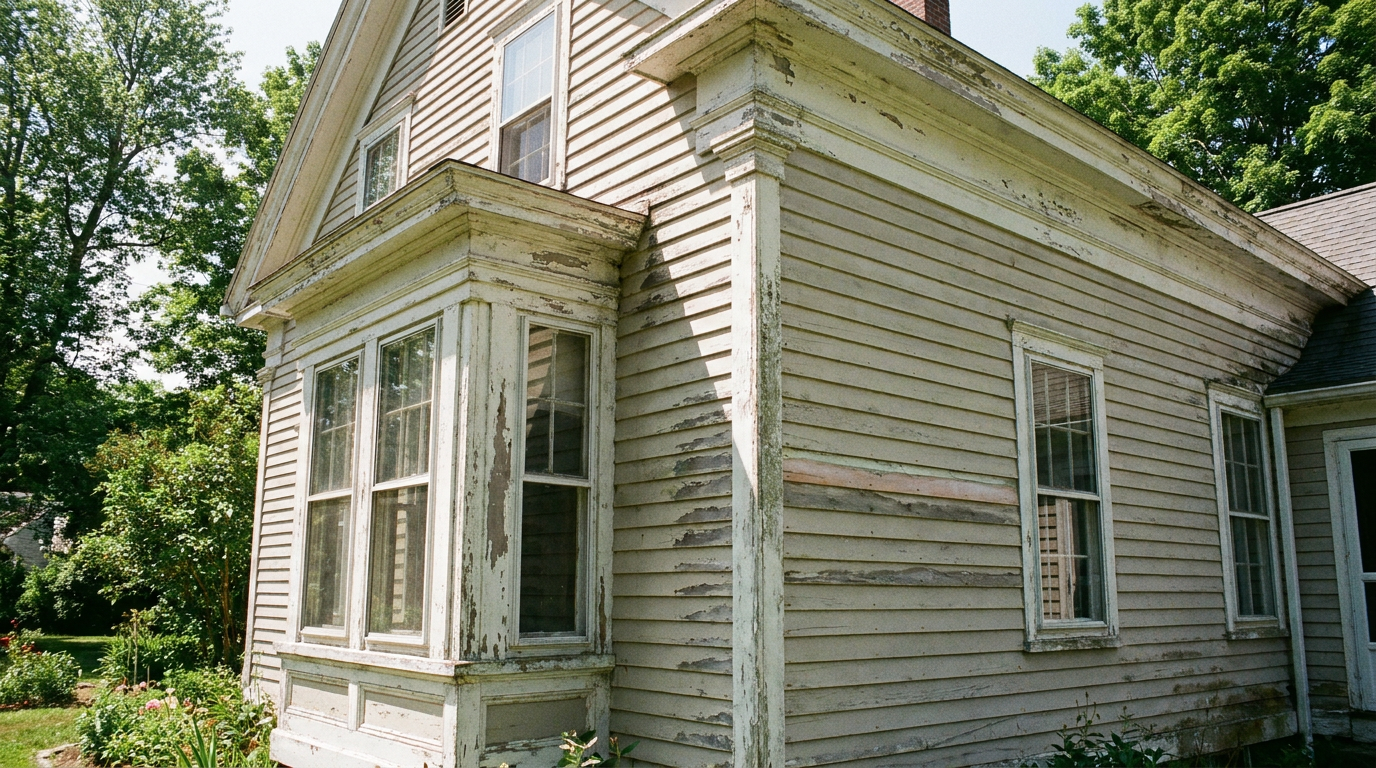
Prep standards may change based on:
- clapboard condition
- trim and fascia wear
- cedar movement or weather stress
- older detail areas with heavier paint buildup
- transition points where earlier repairs are visible
- sections exposed differently to shade, wind, or moisture
That is why exterior prep standards on older homes should be based on actual surface behavior, not just a generic checklist.
Prep standards also change by material. Wood, vinyl, stucco, cedar, clapboard, trim, and siding do not all age or hold coatings the same way, so it helps to understand how surface type affects painting before choosing the prep and coating path.
A Better Prep Standard Helps the Repaint Hold Longer
The point of stronger prep is not only to make the surface look cleaner before painting. It is to give the next coating system a better chance to bond, hold, and age more evenly.
A stronger prep standard usually helps by:
- removing weaker material before repainting
- reducing early failure points
- improving adhesion conditions
- making trim and detail areas more stable
- giving finish coats a better base to perform from
That does not mean every old home needs the same level of correction. It means older homes should be judged by condition first, not by assumption.
Prep quality has a direct effect on paint life. Homeowners comparing timing and maintenance expectations may also want to review how long exterior paint lasts in New Haven County before deciding whether the home is ready for repainting.
How Homeowners Should Think About Prep Standards More Clearly
A better question is not only “does this home need paint?” It is:
- how stable are the existing surfaces
- where are the weak areas showing first
- how much older paint buildup is affecting the job
- whether moisture is increasing failure risk
- what level of prep is needed before repainting is worth doing
That gives homeowners a clearer way to understand why older homes often need more prep and why that prep affects cost, durability, and final results.
For older homes in New Haven County, prep standards can vary by surface age, shade, moisture exposure, previous repaint cycles, trim condition, and how past repairs were handled.
Exterior Painting Prep Standards for Older Connecticut Homes FAQ
Why do older homes usually need more prep before exterior painting?
Older homes often carry layered coatings, weaker adhesion, more weathered trim, and more visible failure points, so repainting usually needs a stronger prep path.
Does age alone mean the whole exterior needs major correction?
Not always. The real issue is surface condition, not the age of the house by itself.
What usually raises prep standards the most?
Weak adhesion, peeling paint, moisture stress, older trim wear, and unstable earlier coatings are some of the biggest factors.
Can stronger prep help paint last longer?
Yes. Better prep usually improves bonding conditions and reduces the chance of early failure in weaker areas.
Should older homes be priced differently for exterior painting?
Often yes, because prep depth, repair needs, and sequencing can be broader than on newer or more stable surfaces.
Start With a Clearer Exterior Prep Review
If you are planning exterior painting on an older Connecticut home, the most useful next step is to review surface stability, moisture exposure, repair depth, and how much prep is really needed before repainting begins.
A better prep review helps homeowners understand whether the home is ready for a straightforward repaint or whether broader correction is needed first for better durability and a cleaner long-term result.
Alves Pro House Painters helps Connecticut homeowners with clearer exterior evaluations, organized prep expectations, and repaint planning built around real surface condition instead of broad assumptions.
If your older Connecticut home needs exterior repainting, the best next step is to review the surface condition before assuming the project is simple. You can request an exterior painting estimate to understand the prep, repair, and coating path more clearly.
What Happens Next
- We confirm your location and project type
- We review surface condition and visible prep needs
- We identify likely repair and stabilization factors
- We prepare a written estimate based on real conditions
Older surfaces need more review • Prep affects durability • Repair depth changes scope