
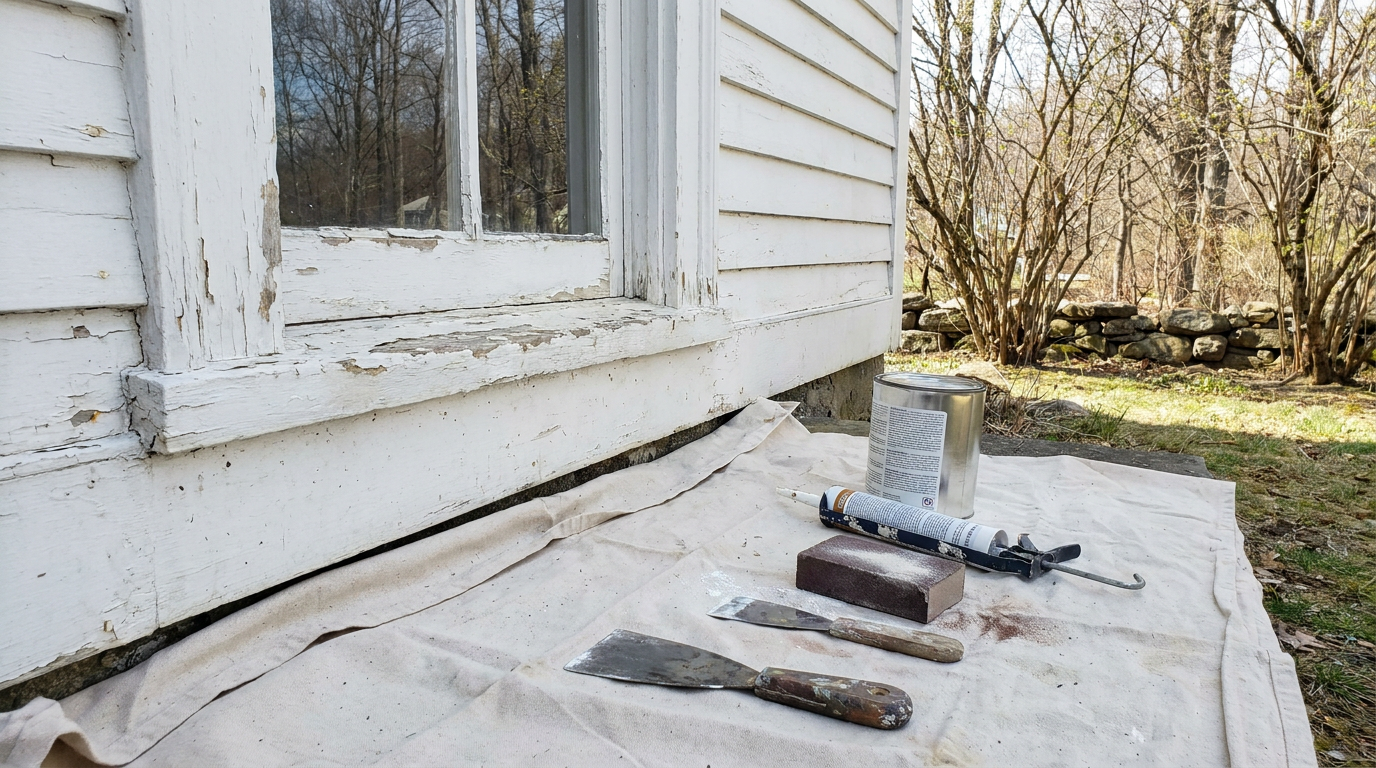
Paint often peels after winter because the coating system was already under stress before the season changed. In Connecticut, winter exposure can intensify moisture problems, weak adhesion, surface movement, and older coating failure, especially on homes that already had vulnerable areas before repainting or weather exposure increased. Before starting exterior painting, the surface should be reviewed to understand why the coating failed.
Winter Often Reveals Problems That Were Already Developing
Many homeowners notice peeling paint in late winter or early spring and assume the season alone caused the issue. Winter weather can be a major trigger, but in many cases it exposes weaknesses that were already present in the surface or coating system.
That may include:
- older paint losing adhesion
- edges that were already beginning to lift
- trim or siding that was holding moisture
- weak prep from a previous paint job
- areas where the surface was never fully stabilized
Winter stress often does not create the entire problem from nothing. It tends to reveal where the exterior was already vulnerable.
Moisture Is One of the Biggest Reasons Paint Peels After Winter
Moisture is one of the most common drivers behind peeling paint in Connecticut homes.
During and after winter, moisture-related stress may involve:
- damp surfaces that dry slowly
- water working into joints, edges, or weak transitions
- repeated freeze-thaw movement
- shaded areas that stay wet longer
- trim or siding that was already holding moisture before the cold season
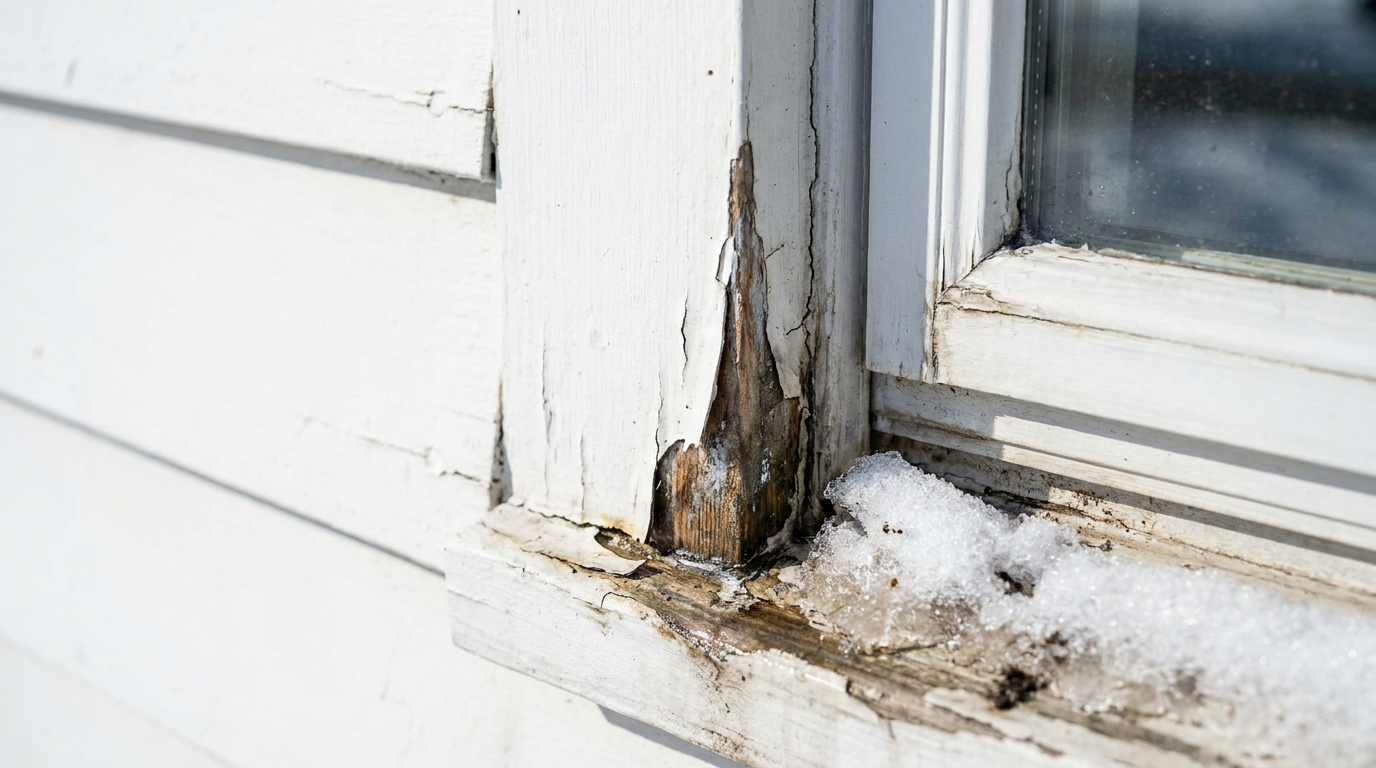
When moisture keeps affecting the surface, the paint system may begin losing its hold, especially in sections that already had light prep or earlier instability.
Peeling after winter is often connected to moisture that moved behind the coating before or during cold weather. Homeowners should understand the moisture problems that ruin exterior paint before assuming the issue is only the paint product.
Comparison Table — Why Paint Often Peels After Winter
| Winter Stress Factor | Why It Matters | What to Review |
| Moisture Retention | Keeps the coating system under stress longer | Whether damp areas dry slowly or hold moisture through winter |
| Weak Adhesion | Makes peeling more likely after seasonal stress | Whether earlier coatings or edges were already losing hold |
| Prep Quality | Affects how well the surface resists winter exposure | Whether scraping, sanding, cleaning, and correction were thorough enough |
| Surface Vulnerability | Creates localized failure points first | Whether trim, joints, edges, or older weak areas are breaking down |
| Freeze-Thaw Stress | Can intensify movement and surface weakness | Whether seasonal expansion, contraction, and moisture are combining in the affected area |
Weak Adhesion Becomes More Visible After Seasonal Stress
Peeling often happens because the paint was no longer bonding well enough to hold through harsher seasonal conditions.
Adhesion can weaken when:
- paint was applied over unstable earlier coatings
- peeling areas were not corrected thoroughly
- chalky or dirty surfaces were coated over
- sanding and scraping were too limited
- failed caulk or weak edges were left in place
- the surface was not properly prepared before repainting
When winter stress hits those already weak areas, the loss of adhesion becomes much easier to see.
When peeling appears after winter, the issue may be connected to weak prep, old coating layers, poor adhesion, or skipped primer. Older homes often need stronger surface review, which is why it helps to understand exterior painting prep standards for older Connecticut homes before repainting.
Some Areas of the Home Are More Likely to Peel First
Peeling usually does not appear everywhere at the same time. It tends to show up first in the areas under the most stress.
That often includes:
- lower sections with more moisture exposure
- trim details and edges
- joints and transitions
- weather-facing elevations
- shaded areas that dry slowly
- surfaces where older paint had already started to weaken
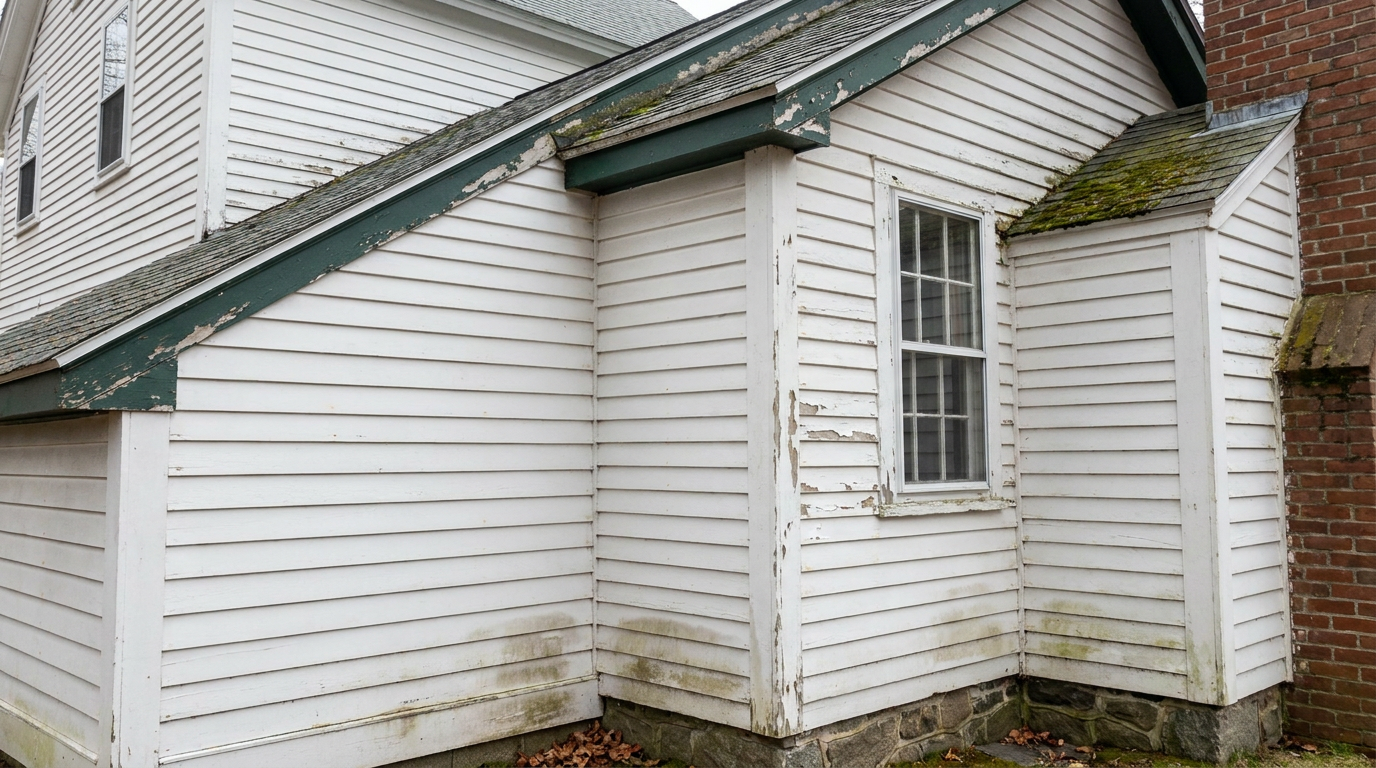
This is one reason homeowners may see one side of the home failing earlier while other sections still appear relatively stable.
Failed caulk and open joints can let water reach areas behind trim, siding, and painted edges. That is why exterior caulk failure should be reviewed before repainting surfaces that peeled after winter.
Peeling After Winter Does Not Always Mean Only One Problem
When exterior paint peels after winter, the cause is often not just one simple issue. It is usually a combination of conditions that built up over time.
That combination may include:
- seasonal moisture stress
- weak prep from an earlier project
- older paint layers already failing
- surfaces that were overdue for repainting
- material movement across cold and warm cycles
- areas of the home that hold more dampness than others
A better review usually looks at the full condition of the affected areas instead of assuming the paint failed for only one reason.
Winter peeling is one sign that the exterior system may not be holding up as expected. Moisture, sun, shade, surface type, prep quality, and product selection all influence what affects exterior paint durability in Connecticut homes.
Different Surfaces Can React Differently After Winter
Surface type also changes how winter-related peeling shows up.
For example:
- wood may absorb and release moisture differently
- vinyl may behave differently under expansion and contraction
- stucco or textured surfaces may hold stress in a different way
- trim details may show failure sooner than broader field surfaces
This is one reason winter paint failure should be reviewed in the context of the actual material, not just the visible peeling alone.
How Homeowners Should Think About Peeling Paint More Clearly
When paint peels after winter, the right question is not only “what product was used?” A more useful question is:
- what was the condition of the surface before winter
- where was moisture already affecting the home
- how stable was the previous coating system
- what prep was done before painting
- which elevations or materials were under the most stress
That gives a clearer view of why peeling is happening and what needs to be corrected before repainting can hold more reliably.
The right response to peeling paint is not always to repaint immediately. A clearer process should review loose paint, moisture sources, failed caulk, primer needs, surface repairs, and finish expectations before new coats are applied.
For homes in New Haven County, winter peeling can vary by shade, moisture exposure, siding type, trim condition, age of the coating, and how previous repaint cycles were handled.
Paint Peeling After Winter FAQ
Why does paint often peel after winter in Connecticut?
Winter often exposes weak adhesion, moisture stress, unstable earlier coatings, and vulnerable surfaces that were already beginning to fail.
Is moisture one of the main causes of peeling?
Yes. Moisture is one of the biggest reasons paint loses hold, especially in areas that dry slowly or were already weakened.
Can poor prep lead to peeling after winter?
Yes. If scraping, sanding, cleaning, or correction were too limited, winter conditions can make those weak areas fail sooner.
Why does only one part of the house peel first?
Different elevations and materials experience different levels of moisture, sun, wind, and seasonal stress, so they do not fail evenly.
Does peeling mean the whole house needs repainting immediately?
Not always. Some homes have more localized failure, but the affected areas should be reviewed carefully to understand the broader condition of the exterior.
Get a Clearer Exterior Review Before Repainting
If you are seeing peeling paint after winter, the most useful next step is to understand whether the issue is isolated or part of a broader pattern involving moisture, adhesion loss, weak prep, or aging exterior surfaces.
A better review helps homeowners understand why the failure is happening, what conditions may still be affecting the home, and what needs to be corrected before repainting can deliver a more stable result.
Alves Pro House Painters helps New Haven County homeowners with clearer exterior evaluations, organized prep expectations, and repaint planning built around real surface conditions rather than surface-level assumptions alone.
If your home has peeling paint after winter, the next step is to review why the surface failed before repainting. You can request an exterior painting estimate based on the actual moisture, prep, adhesion, and surface conditions.
What Happens Next
- We confirm your location and project type
- We review the exterior surfaces and visible failure areas
- We identify likely moisture, prep, and adhesion factors
- We prepare a written estimate based on real conditions
Winter reveals weak areas • Moisture affects adhesion • Prep affects paint life